Modern Foreign Languages
 Aim
Aim
To encourage students to:
- Understand and respond to spoken and written language from a variety of authentic sources
- Speak with increasing confidence, fluency and spontaneity
- Write at varying lengths, for different purposes and audiences, using an increasing variety of grammatical structures
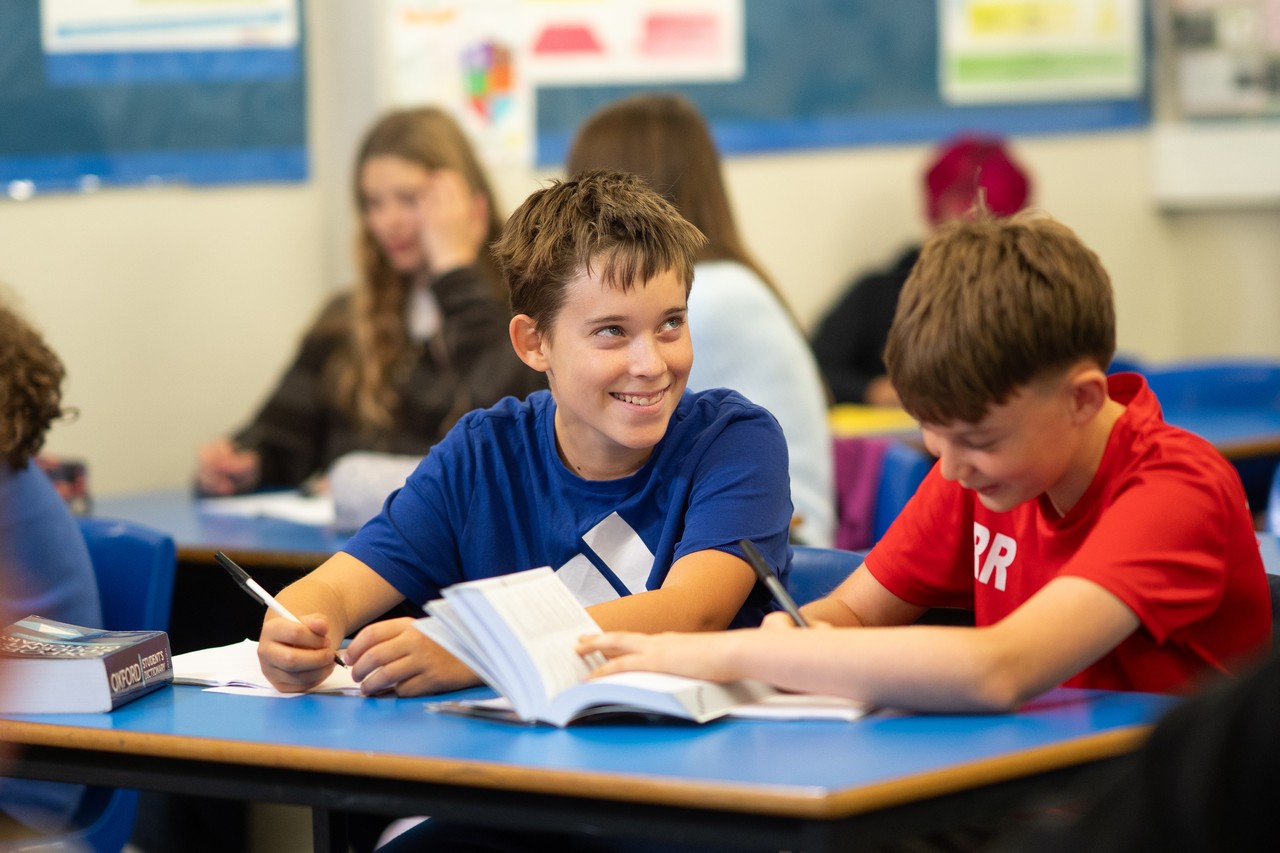
- Develop a wide range of language learning skills, such as dictionary skills, group work and the ability to work independently
- Make comparisons with a student's first language(s) to increase language awareness and to develop general literacy skills
- Develop students' awareness of the world beyond their experience and develop positive attitudes to other cultures
Topics covered
French
- The French-speaking world
- My family
- Myself
- My house
- My town
- End of year project
German
- Myself
- My family
- Descriptions
- My house
- My town
- End of year project
Spanish
- The Spanish-speaking world
- My family
- Myself
- My house
- My town
- End of year project
Teaching groups
Students study either French, German or Spanish. If parents communicate a preference for one of these, School will make every effort to accommodate this.
Assessment
Formal assessment tasks are set at least once a term, usually before the Schools data collection points. The range of assessed tasks set varies, but will typically include writing, speaking (speaking card/role play), listening and reading and translation exercises. The tests set may not be identical for each of the taught languages, but will be standardised within each language. Feedback in the form of grades and targets will be given to students.
Students will also have regular vocabulary tests to consolidate learning.
How to support at home
- Ensure children have the basic equipment for lessons
- Ensure homework is completed
- Regularly check children's planners and exercise books
- Provide access to a bilingual dictionary
- Support your child's revision for vocabulary tests