History
 Aim
Aim
- The History curriculum is relevant to our diverse range of students and provides opportunities to enhance their access to cultural capital so that all students can join in the conversation
- Students should be able to ‘see themselves’ in the curriculum, while also building their knowledge and understanding of a diverse past that takes them into the unfamiliar
- We aim to develop curious historians who are increasingly able to work independently to critically think about the past in order to develop a better understanding of the present
- To enable this, students study a knowledge-rich curriculum which includes a range of breadth and depth enquiries from local, national and global perspectives
- Enquiries are challenging and rooted in academic historical scholarship, with the role of the historian at the centre of the student’s learning
- To make this happen, all staff are engaged with contemporary debates in the professional community and keep up to date with a range of scholarly reading
- A process of reflection underpins everything that we do. Our curriculum is constantly under evaluation and is never complete
Topics covered
- How does Peter Frankopan know about the Silk Roads?
- Did the Normans bring a 'truckload' of trouble?
- What do the Plantagenets reveal about power in the Medieval Ages?
- Was the period of the Crusades a time of continuous conflict between Muslims and Christians?
- What difference did the Black Death really make?
- What does the life of Mansa Musa reveal about Medieval Mali?
- Why was the Church so important in the Early Modern period?
- What mattered to the Mughals?
- What does the confinement of Mary Queen of Scots reveal about power, religion and culture?
- Why did Europe see England as 'Devil-Land' during the reign of the Stuarts?
Teaching groups
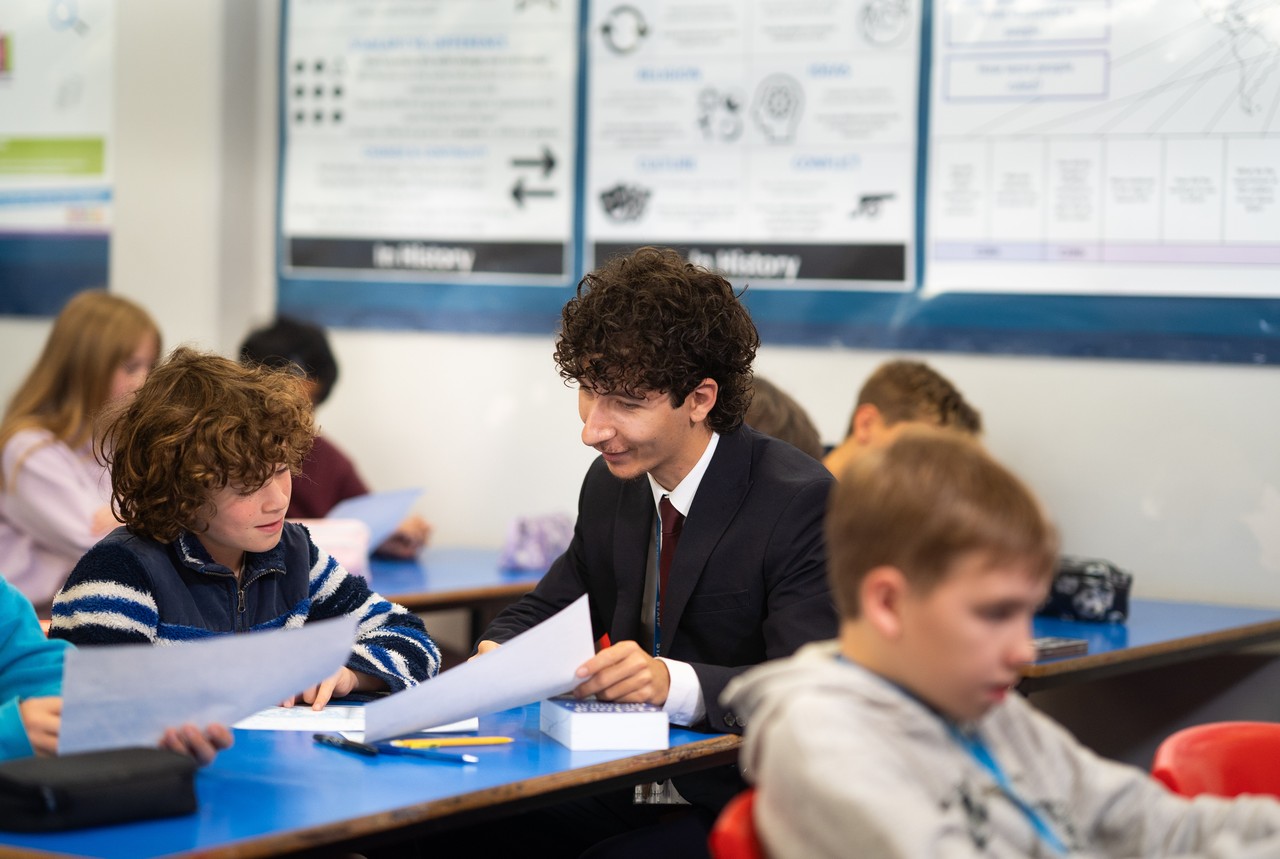
Students are taught in form groups twice per week.
Assessment
Students are assessed in a range of ways in lessons and at the end of each enquiry, including extended writing and other types of response to our six underpinning curricular questions:
- How was the world connected?
- What mattered to people?
- How were people ruled?
- How do historians construct interpretations?
- How do historians analyse sources?
- How do historians communicate their ideas?
There are five summative assessments from Year 7 to Year 9. These measure progress by testing knowledge from all enquiries studied to that point.
How to support at home
- Encourage children to immerse themselves in the time periods studied by reading, listening to or watching related materials
- Participate in discussions with your child about historical or political issues in the news and media
- Encourage children to ask questions about the world around them
- Encourage children to read books that are related to the enquiries we study in lessons
For further information
Our curriculum is based on the Key Stage 3 National Curriculum. It is also heavily influenced by the principles of best practice endorsed by The Historical Association and The Schools History Project.
For further information on the Key Stage 3 National Curriculum, click here.