
Music (AQA)
 What do I need to study music?
You should have a GCSE music qualification, Grade 9 - 6. In addition, Grade 5 theory is of great benefit in understanding the course. It would be advisable to be at least grade 5 standard on your main instrument(s). We sometimes admit students onto the course who have not taken GCSE music. These students have usually gained a wide experience of performing, composing and listening through out-of-class activities. Each such case is considered on its own merits. Please contact Mr Doubleday if you have enquiries.
Extra-curricular music at School
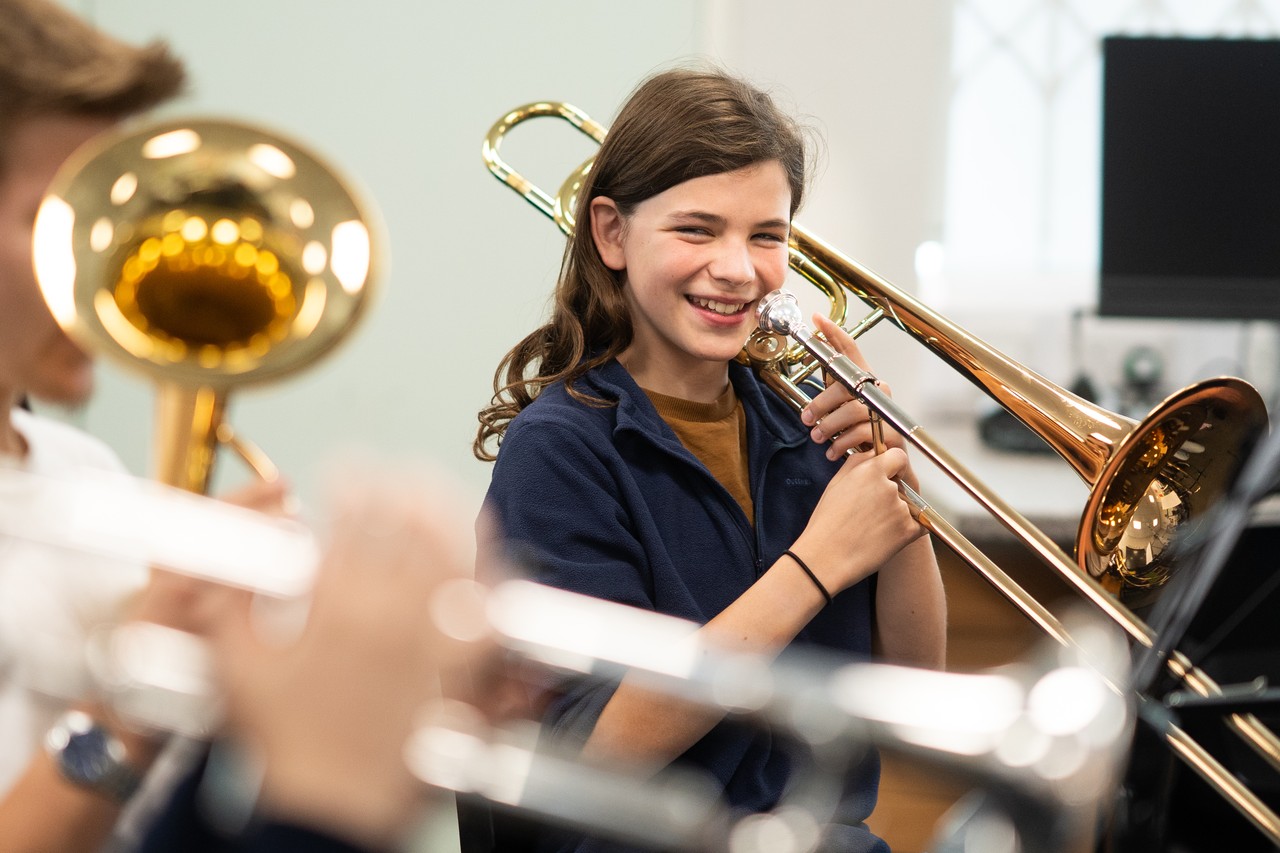
The music course is supplemented by extra-curricular music activities that encompass a wide variety of styles and approaches. Our choirs, bands and orchestras serve both to provide excellent training and concerts of a superb standard. These groups are open to all: participation is not subject to audition. Chamber groups (trios, quartets, etc) receive expert advice and training, and the school regularly enters the Music for Youth festival. There are platforms for solo and small group performances and jazz bands run by sixth form students. Most of the above groups are directed by staff, but one of the most exciting aspects of the extra-curricular programme is the increasing number of student-led groups. Soul, jazz, a cappella female voices and rock are among the styles practised by student groups. These contribute to the individual’s acquisition of key skills, and to the school community’s thriving cultural life.
What will I be able to do with an A Level in music?
An A Level in music may take you into higher education, into academic university courses, performance courses linked with other arts subjects, song writing and performance work, Composition courses e.g. classical, music theatre or film. It is also a useful qualification for entry into combined courses with subjects such as Dance, Drama, English, Languages and Mathematics. Job possibilities include performing, arts administration, sound/music technology, music in theatre and film, teaching and music therapy. It is also true that many music graduates find success in other areas due to the skills that they acquire and hone during their musical studies.
A level music AQA – 7272
The A Level course has three components and you will study a variety of styles in performing, composing and appraising music. The performance and compositions will be completed in Year 13 and you will work on these aspects of the course during Year 12 alongside the appraising music component.
The A Level components are:
| Component | Topic/assessment |
|---|---|
|
Component 1 Appraising music 40% of A Level marks |
In this component you will study music from the Western Classical Tradition (1650 – 1910) and music from two of the following areas, decided upon by the teacher:
This knowledge should support the composing and performing activities. This component is assessed through examination at the end of the course and contains three sections:
|
|
Component 2 Performance 35% of A Level marks |
In this component a minimum of ten minutes of performance is required. The performance can be as a soloist, part of an ensemble or as a music production using recording techniques. The work will be recorded in school and that recording will be assessed by AQA examiners. |
|
Component 3 Composition 25% of A Level marks |
In this component you will compose two pieces of music in a style of your choice. One composition will be to a brief set by AQA and the other is a free composition. You will need to write programme notes for both compositions although these notes are not assessed. The compositions will be assessed by AQA examiners. |