Music
 Aim
Aim
- To improve musicianship
- To listen to a variety of music and develop aural skills
- To improve cultural understanding
- To become more fluent in performing and composing
- To use different music notations more effectively as relevant to the task
- To work with others in developing their musical skills
Music is part of the challenges choices that students make to design their own curriculum.
Topics covered
There are six units of work in Year 8 which aim to build on the skills that they have learnt in Year 7.
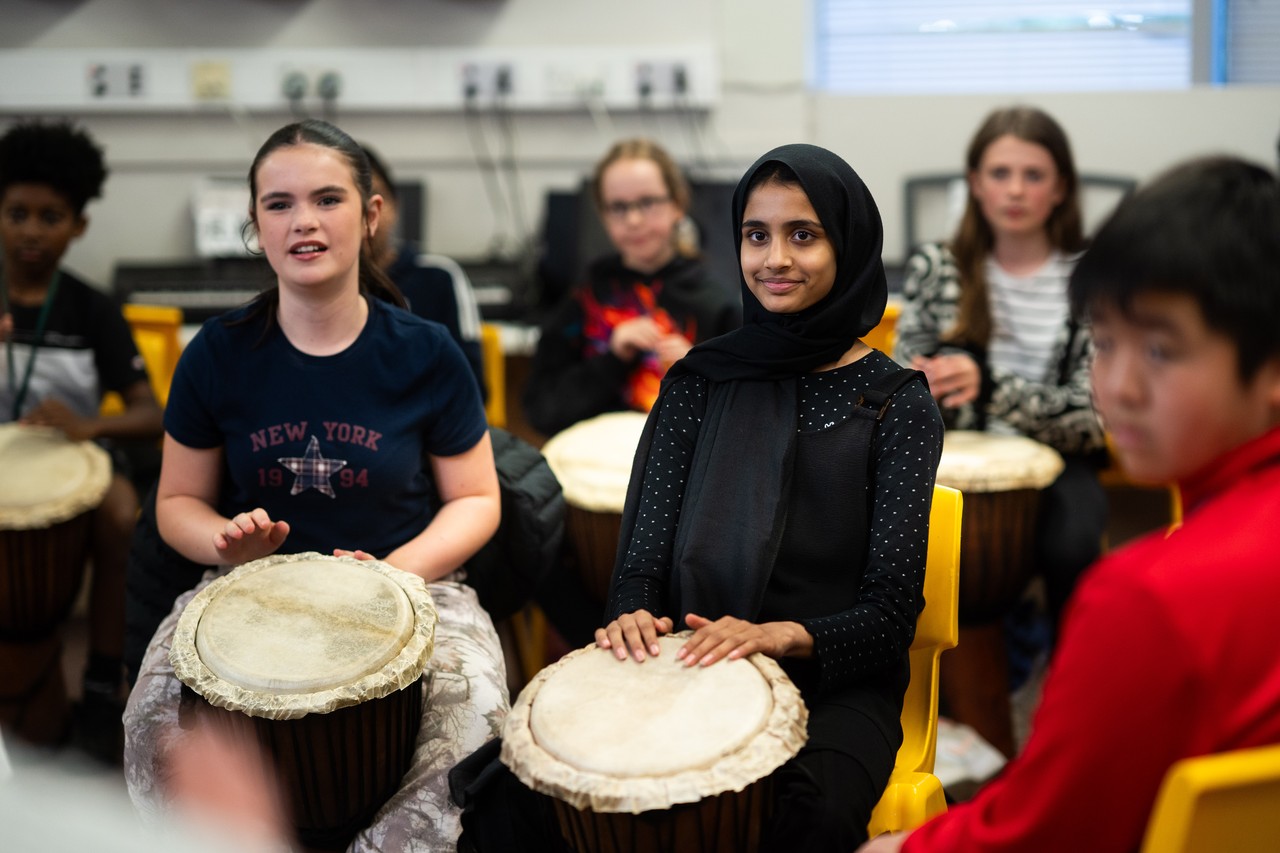
- Unit 1: African Djembe Drumming; students learn a traditional African rhythm from Ghana on Djembe. They prepare and record a whole class performance from memory that uses polyrhythms, call and response and solos
- Unit 2: The Blues; students learn about the cultural significance of the genre, learn the Duke Ellington classic, “C Jam Blues”, and develop improvising and ensemble skills
- Unit 3: Structure and form; students learn about song structure and then how to structure an 8-bar melody through composition. This technique will then be put into practice via a Binary Form composition that uses elements to create different moods
- Unit 4: Music Tech 2 – Synths and Drum Machines; students focus on learning how to programme synthesizers and drum machines within a DAW, with a focus on new wave music of the 1980s from local bands such as The Human League
- Unit 5: Video Gaming Music; video gaming music is a huge industry. Students gain an overview of how gaming music has changed over time due to advances in technology, and will perform and compose music for different characters to create a collage composition.
- Unit 6: How to Write a Hit Song; students learn songwriting techniques with a focus on either using technology or performing their own songs
Teaching groups
Year 8 students are taught in mixed ability groups with a maximum size of 24.
Assessment
Assessment is in line with School and National Policy and uses the GCSE grades.
How to support at home
- Encourage students to practice keyboard skills at home if they have a keyboard. Also, to learn the basics which they need for lessons, which includes notes on music lines, note lengths, music vocabulary and notes on the keyboard
- Listen to lots of different styles of music at home
- Support and encourage students to practice regularly if they have instrumental or vocal lessons, by listening to them play occasionally and taking an interest in the music which they are working on for their lessons
- Encourage students to participate in extracurricular music clubs:
- Lower School Choir – no audition, everyone welcome
- Lower School Orchestra – all string, woodwind and brass players
- All players are encouraged to participate, whether they have lessons in School or out of School