Science
 Aim
Aim
- To engage students’ curiosity
- To continue developing students’ practical and investigative skills
- To increase knowledge and understanding of the human body and the world around us
- To develop students’ scientific literacy and critical thinking skills as they consider different people’s views and the media
Topics covered
Year 8 students are taught nine topics which are split into three blocks:
- Block One (September-January): Plants, acids, alkalis and metals and waves
- Block Two (January-May): Life and origins, earth and materials and forces
- Block Three (May-July): Biochemistry, scientific evidence and the media and working scientifically
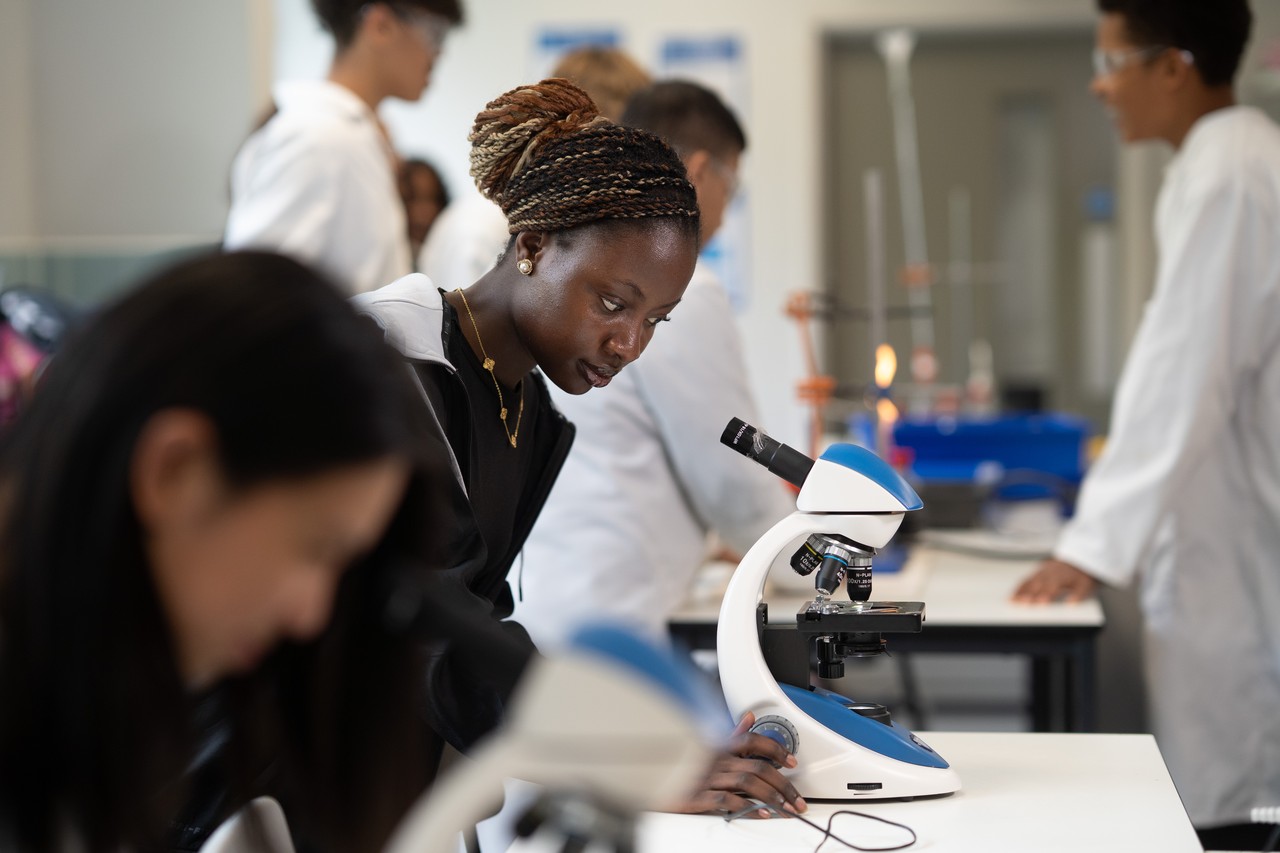
Within these topics, students get the opportunity to develop their practical and investigative skills as well as to find out about the work of scientists.
Teaching groups
Students are placed into sets at the start of Year 8 and are taught in classes of similar ability students. This allows them to receive teaching which most closely matches their ability and needs.
On each side of the year, there are two parallel set one classes and two parallel set three classes. On one side of the year, there is a further group for students who need more support in accessing the curriculum.
Assessment
Students will complete assessments at the end of each topic, allowing teachers to assess student progress. There will also be an assessment at the end of the year on content from the whole year. The result of this test will be used to determine students’ current attainment as well as in setting students for the following year.
How to support at home
- Encourage the use of a Key Stage 3 Science Course Guide or Knowledge Organiser (if these were purchased in Year 7)
- Support your child in completing homework on time and talking to them about what they have been doing in Science. Much of the homework set is online (using Seneca)
- Encourage students to watch documentaries about space and nature (for example, Planet Earth, Blue Planet and The Solar System) – there are many available on BBC iPlayer or streaming services
If you want to view the level of content, then you can visit BBC Biteszie by clicking here